Numerical study of a Geothermal Heating System Using Hot Groundwater and CuO–Water Nanofluids: A Case Study of Ouargla, Algeria
DOI:https://doi-001.org/1025/17865128011642
Intissar Achouri 1, Said Benfardjallah 1, Naima Mekhloufi 1, Soumia Derdouri 1, Nassira Gheddari 1
1 Laboratory for Development of New and Renewable Energies in Arid and Saharan Zones (LENREZA) University Kasdi Merbah Ouargla, Algeria
Email: Intissarachouri.30@gmail.com
Received: 21/06/2024 ; Accepted : 26/11/2024 ; Published : 21/12/2024
Abstract
The present study numerically investigates a residential heating system driven by hot groundwater as a renewable geothermal energy source. A heat exchanger was modeled to evaluate the transfer of geothermal heat to an indoor space under different operating conditions. Water was adopted as the baseline working fluid, and its thermal behavior was compared with that of CuO–water nanofluids prepared at volume concentrations of 2% and 5% to quantify the resulting improvement in heat-transfer performance. The numerical analysis was conducted to determine how variations in the working conditions—including the fluid mass flow rate, CuO nanoparticle loading, and ambient temperature—affect the resulting indoor temperature evolution. Groundwater emerges from the numerical assessment as a viable low-temperature heat source capable of sustaining the required indoor thermal conditions. Reducing the flow rate enhanced the indoor thermal response by allowing the fluid to remain longer inside the heat exchanger, thereby promoting greater heat transfer. The incorporation of CuO nanoparticles enhanced the heating performance compared with water, with the 5% nanofluid providing the most favorable thermal response among the investigated cases. Despite variations in outdoor conditions, the nanofluids maintained a positive effect on heat transfer. Overall, incorporating CuO nanoparticles into the heat-transfer fluid offers a promising pathway for increasing the thermal effectiveness of geothermal heating applications, particularly under cold-weather conditions. Nevertheless, the nanoparticle loading must be selected within an appropriate range, since excessive concentrations may compromise fluid stability and offset the associated heat-transfer benefits.
Keywords: geothermal energy; hot groundwater; heat exchanger; residential heating; CuO–water nanofluid; heat transfer enhancement; numerical simulation; sustainable heating.
1. Introduction
The building sector is a major consumer of energy, with space heating constituting an important component of energy demand in many regions during the winter season. The continued dependence on conventional heating systems, particularly those based on fossil fuels or electricity, contributes to increased energy consumption and associated environmental impacts. At the same time, the need to maintain acceptable indoor thermal conditions requires reliable and efficient heating systems, especially during periods of low outdoor temperatures. These challenges have encouraged increasing interest in renewable energy technologies capable of supplying useful heat while reducing dependence on conventional energy sources[1]–[3].
Among the renewable energy resources available for thermal applications, geothermal energy offers particular advantages for heating purposes because of the relatively stable thermal conditions of underground resources[4], [5]. Unlike renewable sources whose availability is strongly affected by solar radiation, wind conditions, or seasonal variability, geothermal resources can provide a comparatively continuous source of thermal energy. The practical application of geothermal energy for building heating is governed largely by the resource’s thermal level and hydraulic conditions. Where direct use is not suitable, the available heat can be conveyed to the building via a dedicated heat exchanger. The performance of such systems is influenced by the available geothermal temperature, flow rate, heat-exchanger configuration, together with the thermal and physical characteristics of the circulating fluid [6], [7].
This potential is of particular interest in southern Algeria, which possesses significant low- and medium-enthalpy geothermal resources[8]. Algeria has been identified as one of the countries with substantial geothermal potential in Africa, with many resources associated with thermal groundwater systems suitable for direct-use applications[8], [9]. In southeastern Algeria, the Ouargla region is underlain by the Continental Intercalaire (CI) aquifer, one of the major deep groundwater systems in the region[10], [11]. Hydrogeochemical and geothermometric investigations have reported discharge temperatures of approximately 43–52 °C in the studied Ouargla area and estimated reservoir temperatures ranging from about 60 to 80 °C, indicating a significant geothermal resource suitable for thermal applications[11]. These characteristics make the utilization of hot groundwater for space heating a potentially relevant option, particularly during winter conditions.
The effective use of hot groundwater for building heating depends on efficient heat transfer between the circulating fluid and the heated environment. Heat exchangers facilitate this process while maintaining physical separation between the fluids[7]. Their performance is influenced by the temperature difference, flow conditions, thermophysical properties, heat-transfer area, and exchanger geometry. In ground-based systems, the thermal interaction is also affected by the operating conditions and the thermal properties of the surrounding medium. Enhancing the heat-transfer characteristics of the working fluid can therefore improve the utilization of geothermal energy.
One approach to improving heat-transfer performance is the use of nanofluids, which are engineered heat-transfer media in which nanosized solid materials are suspended within a conventional liquid. This modification alters the thermal and transport characteristics of the host fluid and may improve its heat-conduction capability and convective performance when the nanoparticle loading and operating conditions are appropriately selected [12].However, the thermal-hydraulic performance of nanofluids depends on several factors, including nanoparticle concentration, particle characteristics, temperature, and flow regime [13], [14]. While higher concentrations may enhance heat transfer, they can also increase viscosity and hydraulic resistance, leading to greater pumping requirements [15]. Therefore, nanofluids should be evaluated by considering both their thermal enhancement and associated hydraulic effects.Among the nanoparticles investigated for thermal applications, copper oxide (CuO) has received considerable attention because CuO–water nanofluids can provide enhanced heat-transfer characteristics compared with the corresponding base fluid under appropriate conditions[16], [17].
Research has established the geothermal characteristics and available thermal resources of the CI aquifer in the Ouargla area [10], [11], [18], while separate studies have reported the heat-transfer behavior of nanofluids in thermal systems [19]–[21]. Nevertheless, the use of locally sourced hot groundwater in a horizontal ground heat exchanger, together with a comparison of water and CuO–water nanofluids under Ouargla’s winter conditions, has received little attention. The effects of fluid type, nanoparticle concentration, and mass flow rate on the outlet temperature and overall thermal response therefore remain insufficiently investigated.
Accordingly, the thermal behavior of a horizontal ground heat exchanger was numerically assessed for building heating during winter in Ouargla, Algeria, with particular emphasis on the use of CuO–water nanofluids to enhance heat-transfer performance compared with conventional water. The objective is to focuse on quantifying the thermal benefits of incorporating CuO nanoparticles into the geothermal heating loop, with particular emphasis on the feasibility of integrating locally available geothermal resources with nanofluid-based heat-transfer enhancement for sustainable space-heating applications in the region.
2. Physical and Mathematical Modeling of the Geothermal Heating System
This section describes the physical configuration of the proposed geothermal heating system and the mathematical model used to evaluate its thermal performance. The model accounts for heat transfer through the ground heat exchanger and the resulting indoor air temperature.
The governing equations and thermophysical relationships are formulated based on the system geometry, operating conditions, and adopted modeling assumptions.
2.1. Physical System Description
A numerical model was developed to examine the heating of a closed residential space in Ouargla, Algeria, under winter operating conditions. The considered room measures (4 × 4) m2 and receives heat from a horizontal ground heat exchanger through which hot groundwater is circulated. The geothermal source is assumed to maintain an inlet temperature of approximately Te = 60 °C. During the simulation, the indoor air temperature is allowed to evolve with time in response to the prevailing outdoor thermal conditions.
The heat exchanger is represented by a horizontal cylindrical tube with an outer diameter of (D = 0.015) mm. Two working fluids are investigated: pure water and a CuO–water nanofluid containing copper oxide nanoparticles dispersed in the base fluid at specified volume concentrations. Different operating scenarios are considered to examine how the choice of working fluid affects the heat-transfer behavior and thermal response of the heating system.
System performance is assessed using the outlet temperature of the circulating fluid together with the corresponding indoor air temperature. These indicators provide a basis for evaluating the heat-transfer effectiveness of the exchanger and for determining the extent to which CuO–water nanofluids can improve the heating performance relative to conventional water during winter operation.
2.2. Heat Exchanger Dimensions
The heat exchanger occupies a (3 × 3) m2 square ground area, within which the pipe is laid in a horizontal spiral pattern. Adjacent spiral loops are separated by (d = 0.10) m, while the pipe has an outer diameter of (D = 0.015) m. Considering the specified layout and dimensions, the resulting pipe length is approximately (L = 94.55) m.
The resulting configuration maximizes the available heat-transfer area within the defined ground footprint while preserving uniform separation between neighboring pipe segments. The resulting geometry was adopted as the reference configuration for the numerical analysis of system performance with the different working fluids.
2.3. Modeling Assumptions
For computational efficiency, the model was formulated under a set of simplifying assumptions designed to preserve the dominant thermal behavior of the system:
- One-dimensional laminar flow: The heat-transfer fluid is assumed to flow under laminar conditions in a predominantly one-dimensional and steady direction along the tube.
- Steady-state heat transfer: The heat-transfer process is assumed to occur under steady-state conditions, with no temporal variation in the thermal field during each simulated operating condition.
- Homogeneous surrounding medium: The soil surrounding the heat exchanger is considered homogeneous and thermally uniform. The soil temperature is assumed to be equal to the prescribed temperature associated with the heat-exchanger environment.
- Negligible external heat losses: The heating system is considered ideal, and heat losses from the room to the external environment are neglected. Consequently, the transferred thermal energy is assumed to contribute directly to increasing the indoor air temperature.
These assumptions were adopted to reduce the complexity of the numerical model and allow the influence of the heat-transfer fluid and operating parameters on the heating performance to be clearly evaluated.
2.4. Mathematical and Thermophysical Modeling
The system response was modeled through an energy-balance formulation, using the stated assumptions to determine the heat-exchanger outlet temperature and the corresponding indoor air temperature.
2.4.1. Equation for Calculating the Fluid Outlet Temperature
| (1) |
For a heat-exchanger length of (X=L), the equation takes the following form:
| (2) |
: Depth of the underground heat exchanger, z=5cm.
Or:
| (3) |
: Ground temperature at depth z.
where denotes the total thermal resistance:
| (4) |
2.4.2. Equation for Calculating the Room Temperature
Using the energy balance equation between the heat exchanger and the room:
| (5) | |
| Where: | |
| (6) | |
| (7) | |
| (8) |
So:
| (9) |
is the convective heat-transfer coefficient between the tube and the air
| (10) |
is the heat-transfer surface area:
| (11) |
presents the Mean fluid temperature during its flow through the heat exchanger, given by:
| (12) |
2.4.3. Thermophysical Properties of the Nanofluid
The effective density and specific heat of the CuO–water nanofluid are determined from the following expressions:
| (13) | |
| (14) |
In these expressions, the nanofluid properties are represented by and
, whereas
and
correspond to water as the base fluid.
and
denote the density and specific heat capacity of CuO nanoparticles, respectively, while
defines their volume fraction within the nanofluid.
2.4.4. Thermophysical Properties of CuO Nanoparticles
CuO nanoparticle properties were incorporated into the nanofluid model to assess its thermal performance.
Table 1: Thermal properties of CuOnanoparticles used in the present study.
| Property | Symbol | Value | Unit |
| Density | 6000 | kg/m3 | |
| Specific heat capacity | 551 | J/(kg·K) |
3. Results and Discussion
Following a theoretical assessment of the effectiveness of the heat exchanger for room heating during the winter season, 19 December was selected as a representative cold day for the analysis. The variation in room temperature was investigated at six different time intervals: 06:00, 09:00, 17:00, 20:00, 23:00, and 02:00. The analysis was further extended by considering a nanofluid composed of a copper oxide–water (CuO–water) mixture at different concentrations, with the objective of evaluating and comparing the thermal performance of the system under conventional and nanofluid operating conditions.
3.1.Ambient Air Temperature at Different Times and the Corresponding Convective Heat-Transfer Coefficients
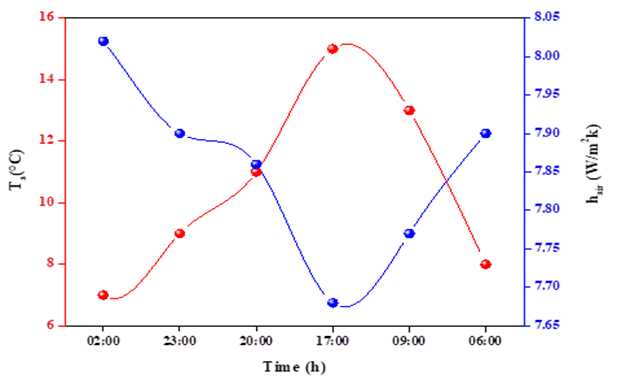
Figure 1: Initial Air Temperatures and Corresponding Convective Heat-Transfer Coefficients on 19 December.
3.2.Fluid Outlet and Room Temperatures with Water as the Working Fluid in the Heat Exchange
- Calculation of the Water Outlet Temperature and Room Temperature on 19 December

Figure 2: Variation in water outlet and room temperatures at the specified times for two different flow rates on 19 December at different flows:
and
- Comparison of the Effect of Mass Flow Rate Variation on Room Temperature on 19 December
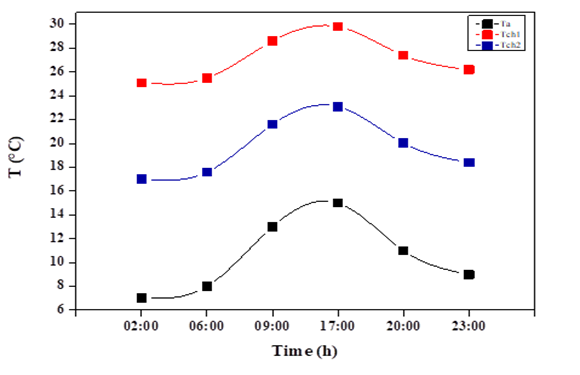
Figure 3:Variation of Room Temperature with Time for Two Different Mass Flow Rates on 19 December.
Figure 3 compares the temporal evolution of the indoor temperature with and without heat-exchanger operation on 19 December. The heated cases, Tch1 and Tch2, remain above the outdoor temperature (Ta) throughout the considered period, confirming the ability of the exchanger to deliver geothermal heat to the indoor space. A clear dependence on the flow rate is also observed: Tch1, corresponding to the lower flow rate, produces a higher indoor temperature than (Tch2). The enhanced heating effect at lower flow rate is associated with the increased residence time inside the exchanger, which favors heat exchange between the circulating fluid and the surrounding tube before the heat is released into the room. Thus, reducing the flow rate improves the thermal contribution of the exchanger under the investigated conditions.
3.3. Fluid Outlet and Room Temperatures with a Copper Oxide–Water Nanofluid in the Heat Exchanger
The thermophysical properties of the CuO–water nanofluid used in the temperature calculations for the different nanoparticle concentrations are presented in Table 2.
Table 2: Thermophysical properties of the CuO–water nanofluid at 2% and 5% nanoparticle concentrations.
| CuO concentration (%) | ||
| 2 | 1096.25 | 4107.42 |
| 5 | 1246.30 | 3998.55 |
- Temperature Calculation at a 2% CuO Nanoparticle Concentration
- Calculation of the Nanofluid Outlet Temperature and Room Temperature
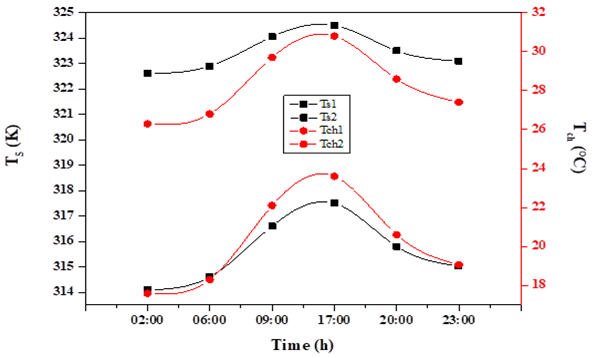
Figure 4:Nanofluid outlet and room temperatures at the specified times for two different mass flow rates and a 2% CuO concentration on 19 December ( and
).
- Comparison of the Effect of Mass Flow Rate Variation on Room Temperature

Figure 5:Variation of room temperature with time for two different mass flow rates on 19 December.
Figure 5 presents the indoor thermal response obtained on 19 December with a 2% CuO–water nanofluid circulating through the heat exchanger. In all simulated cases, the indoor temperature remains above the corresponding ambient temperature, demonstrating the beneficial contribution of the nanofluid-based heating configuration. The effect of flow rate is also evident, as the lower flow condition produces a higher indoor temperature than the higher-flow case. This improvement is mainly related to the increased residence time of the nanofluid inside the exchanger, which strengthens its thermal interaction with the tube surface and increases the heat delivered to the room. Accordingly, the lower flow rate provides the most favorable heating response for the conditions considered.
- Calculation of the Nanofluid Outlet Temperature and Room Temperature on 19 December
- Calculation of the Nanofluid Outlet Temperature and Room Temperature
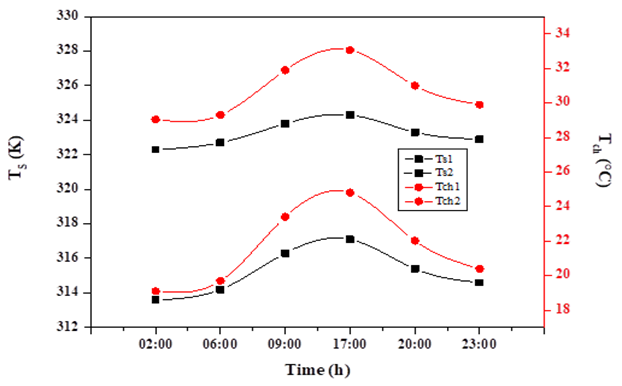
Figure 6:Nanofluid outlet and room temperatures at the specified times for two different mass flow rates and a 5% concentration on 19 December ( and
).
- Comparison of the Effect of Mass Flow Rate Variation on Room Temperature
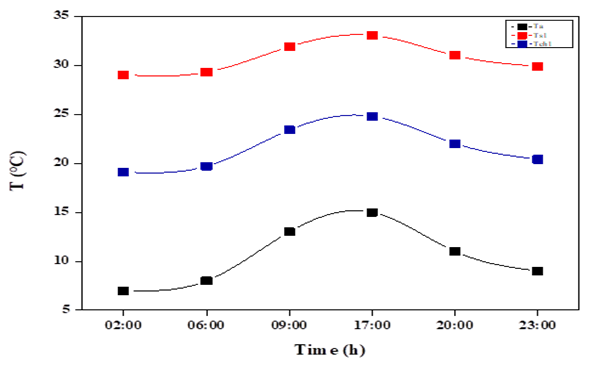
Figure 7:Variation of Room Temperature with Time for Two Different Mass Flow Rates on 19 December.
Figure 7 shows the indoor temperature response obtained with a 5% CuO–water nanofluid on 19 December. A clear improvement in room heating is observed when the mass flow rate is reduced from 0.04 to 0.02 kg/s, with the latter producing the higher indoor temperature. The enhanced thermal response at the lower flow rate is associated with the increased residence time of the nanofluid inside the heat exchanger, allowing more heat to be released to the surrounding environment. Therefore, within the tested range, the 0.02 kg/s operating condition yields the most favorable heating performance.
3.4. Effect of CuO Nanoparticle Concentration in the Nanofluid on the Evolution of Room Temperature
The influence of CuO loading on the indoor thermal response is examined in this section. For consistent operating conditions, the resulting room-temperature profiles are compared to determine how changes in nanoparticle concentration affect the heat-transfer performance of the exchanger.
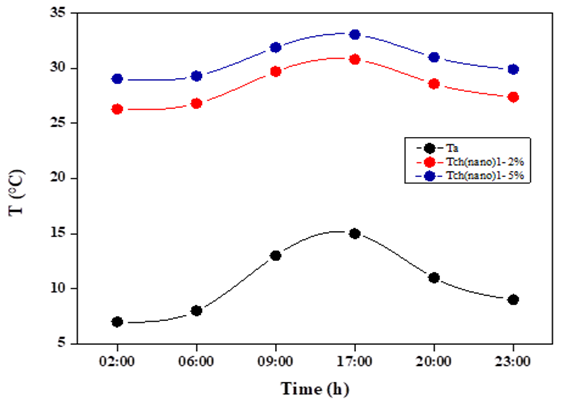
Figure 8:Variation of Room Temperature with Time for Two Different CuO Nanoparticle Concentrations at a Mass Flow Rate of on 19 January.

Figure 9:Variation of Room Temperature with Time for Two Different CuO Nanoparticle Concentrations at a Mass Flow Rate of on 19 January.
Figure 9 compares the indoor temperature profiles obtained with 2% and 5% CuO–water nanofluids at a constant mass flow rate of 0.02 kg/s on 19 December. The 5% suspension consistently produces a higher room temperature than the 2% case, indicating a stronger thermal response at the increased nanoparticle loading. This improvement is associated with the modification of the nanofluid thermophysical properties and its enhanced heat-transfer capability. Hence, within the investigated range, increasing the CuO concentration favors more efficient heat delivery to the indoor space.
5. Conclusion
The numerical analysis confirms the feasibility of employing locally available geothermal water as a heat source for residential space heating in Ouargla. The proposed heat-exchanger configuration was capable of raising the indoor temperature using conventional water, demonstrating that the geothermal resource can provide a practical alternative to conventional heating sources. The thermal response was strongly influenced by the operating flow rate, with the lower mass flow rate producing greater indoor heating due to the increased interaction time between the circulating fluid and the exchanger. Replacing water with CuO–water nanofluids resulted in a further improvement in the thermal response of the system. Under the conditions investigated, the 5% CuO suspension provided a greater heating effect than the 2% concentration, highlighting the role of nanoparticle loading in modifying the heat-transfer characteristics of the working fluid. The simulations also showed that system performance varies with outdoor temperature throughout the day, while the use of CuO-based nanofluids consistently contributed to improved indoor thermal conditions. From an operational perspective, the groundwater leaving the heat exchanger may potentially be reused for domestic applications in an open-loop configuration, provided that its temperature and physicochemical quality satisfy the relevant requirements. However, when CuO–water nanofluids are employed, direct domestic use of the circulating fluid is not recommended, making a closed-loop configuration necessary. Overall, the findings demonstrate the potential of integrating geothermal energy with nanofluid-based heat-transfer technology to improve the efficiency of residential heating systems while reducing dependence on conventional energy sources and contributing to more sustainable energy utilization. Nevertheless, excessive nanoparticle concentrations may lead to agglomeration, sedimentation, increased pressure losses, and reduced operational stability. Therefore, the nanoparticle concentration should be carefully optimized to achieve a suitable balance between thermal enhancement, fluid stability, hydraulic performance, and long-term reliability. Future research should focus on experimental validation of the numerical findings and on investigating the effects of additional parameters, including nanoparticle type and concentration, particle size, mass flow rate, pipe diameter and geometry, heat-exchanger material, groundwater temperature, and outdoor climatic conditions. The long-term stability of nanofluids, nanoparticle deposition, pumping requirements, economic feasibility, and environmental impacts should also be considered to determine the optimal configuration for practical residential heating applications.
6. References
[1] C. Wei, Y. Huang, and A. Löschel, “Recent advances in energy demand for residential space heating,” Energy Build., vol. 261, p. 111965, Apr. 2022.
[2] S. Nadalipour Kaldeh, H. Yousefi, Y. Noorollahi, and M. Abdoos, “Integration of renewable sources in buildings: A review of energy savings, feasibility, and challenges,” Energy Reports, vol. 14, pp. 3905–3934, Dec. 2025.
[3] S. Zhang, P. Ocłoń, J. J. Klemeš, P. Michorczyk, K. Pielichowska, and K. Pielichowski, “Renewable energy systems for building heating, cooling and electricity production with thermal energy storage,” Renew. Sustain. Energy Rev., vol. 165, p. 112560, Sep. 2022.
[4] D. Moya, C. Aldás, and P. Kaparaju, “Geothermal energy: Power plant technology and direct heat applications,” Renew. Sustain. Energy Rev., vol. 94, pp. 889–901, Oct. 2018.
[5] K. Salhein, A. Albagul, and C. J. Kobus, “A Comprehensive Review of Heat Transfer Fluids and Their Velocity Effects on Ground Heat Exchanger Efficiency in Geothermal Heat Pump Systems,” Energies, vol. 18, no. 17, p. 4487, Aug. 2025.
[6] M. Vicidomini and D. D’Agostino, “Geothermal Source Exploitation for Energy Saving and Environmental Energy Production,” Energies, vol. 15, no. 17, p. 6420, Sep. 2022.
[7] A. Dagdas, “Heat exchanger optimization for geothermal district heating systems: A fuel saving approach,” Renew. Energy, vol. 32, no. 6, pp. 1020–1032, May 2007.
[8] H. Saibi, “Geothermal resources in Algeria,” Renew. Sustain. Energy Rev., vol. 13, no. 9, pp. 2544–2552, Dec. 2009.
[9] N. Lebbihiat, A. Atia, M. Arıcı, and N. Meneceur, “Geothermal energy use in Algeria: A review on the current status compared to the worldwide, utilization opportunities and countermeasures,” J. Clean. Prod., vol. 302, p. 126950, Jun. 2021.
[10] N. Boussaada, B. Boualem, S. A. Benhamida, N. Hammad, and M. Kharroubi, “Geochemistry and Water Quality Assessment of Continental Intercalary Aquifer in Ouargla Region (Sahara, Algeria),” J. Ecol. Eng., vol. 24, no. 2, pp. 279–294, Feb. 2023.
[11] A. Abdelali, I. E. Nezli, and A. S. Benhamida, “Geothermometry application to the Continental Intercalaire geothermal aquifer: a case study of Ouargla region,” Energy Procedia, vol. 119, pp. 264–269, Jul. 2017.
[12] S. Porgar, G. Huminic, A. Huminic, R. Najibolashrafi, and S. Salehfekr, “Application of nanofluids in heat exchangers – A state-of-the-art review,” Int. J. Thermofluids, vol. 24, p. 100945, Nov. 2024.
[13] Y. Li, Z. Liu, Y. Wang, T. Liu, and Y. Xie, “Real-time physical field reconstruction for nanofluids convection using deep learning with auxiliary tasks,” Numer. Heat Transf. Part A Appl., vol. 83, no. 2, pp. 213–236, Jan. 2023.
[14] H. Salhi, N. Chafai, K. Benbouguerra, K. K. Yadav, M. Khalid, and G. S. Albakri, “Correlation between thermal conductivity of nanofluids and their structural, electronic and thermodynamic properties: DFT study,” Inorganica Chim. Acta, vol. 589, p. 122919, Jan. 2026.
[15] E. V Timofeeva, W. Yu, D. M. France, D. Singh, and J. L. Routbort, “Nanofluids for heat transfer: an engineering approach,” Nanoscale Res. Lett., vol. 6, no. 1, p. 182, Feb. 2011.
[16] M. Y. Al Shdaifat, R. Zulkifli, K. Sopian, and A. A. Salih, “Thermal and Hydraulic Performance of CuO/Water Nanofluids: A Review,” Micromachines, vol. 11, no. 4, p. 416, Apr. 2020.
[17] et al., “Cu and CuO Nanoparticles in Heat Transfer Applications: A Comprehensive Review,” J. Adv. Mech. Eng. Appl., vol. 6, no. 2, pp. 8–31, 2025.
[18] A. Abdelali, I. E. Nezli, R. Kechiched, S. Attalah, S. A. Benhamida, and Z. Pang, “Geothermometry and geochemistry of groundwater in the Continental Intercalaire aquifer, southeastern Algeria: Insights from cations, silica and SO4–H2O isotope geothermometers,” Appl. Geochemistry, vol. 113, p. 104492, Feb. 2020.
[19] S. Almurtaji, N. Ali, J. A. Teixeira, and A. Addali, “On the Role of Nanofluids in Thermal-hydraulic Performance of Heat Exchangers—A Review,” Nanomaterials, vol. 10, no. 4, p. 734, Apr. 2020.
[20] O. Ilori, S. Inoma, R. Ayoola, J. Orisaleye, and A. Ogunmefun, “Systematic numerical analysis of thermal and hydraulic performance of nanofluids in double-tube heat exchangers,” J. King Saud Univ. – Eng. Sci., vol. 38, no. 6, p. 42, Aug. 2026.
[21] Y. Wang et al., “Evaluation methods of thermo-hydraulic performance in nanofluids: A comprehensive review,” Appl. Therm. Eng., vol. 240, p. 121989, Mar. 2024.